
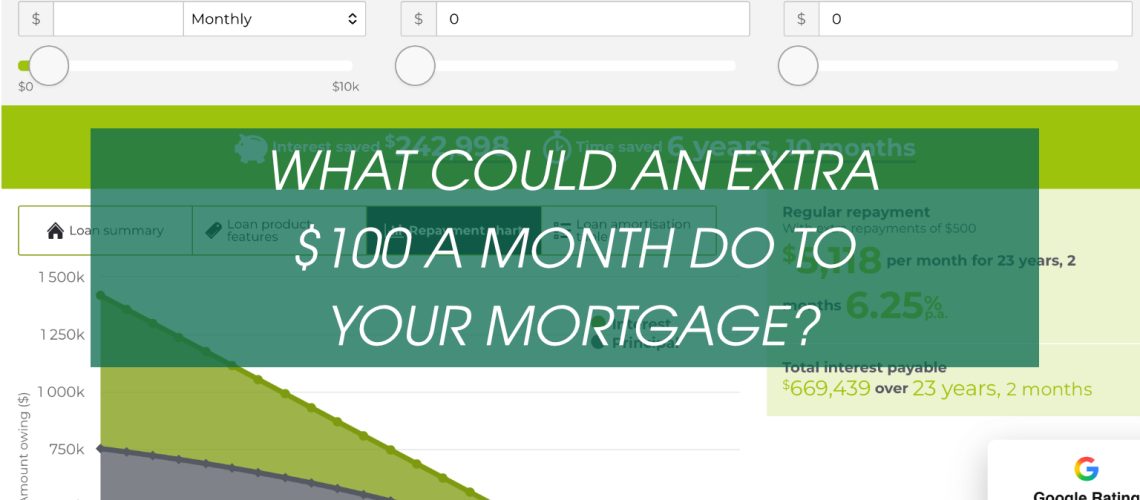
A friend sent me two courses promising to pay a home loan off faster. Here is the free version.
By Brendan Leahy, Naked Real Estate
A friend recently sent me links to a couple of courses that promised clever strategies for paying off a home loan faster. I had a look at both. I was not impressed.
Before anyone pays thousands of dollars for a strategy, I would suggest something far less exciting. Open a mortgage calculator, put your own numbers in, and see what an extra $100 a month does.
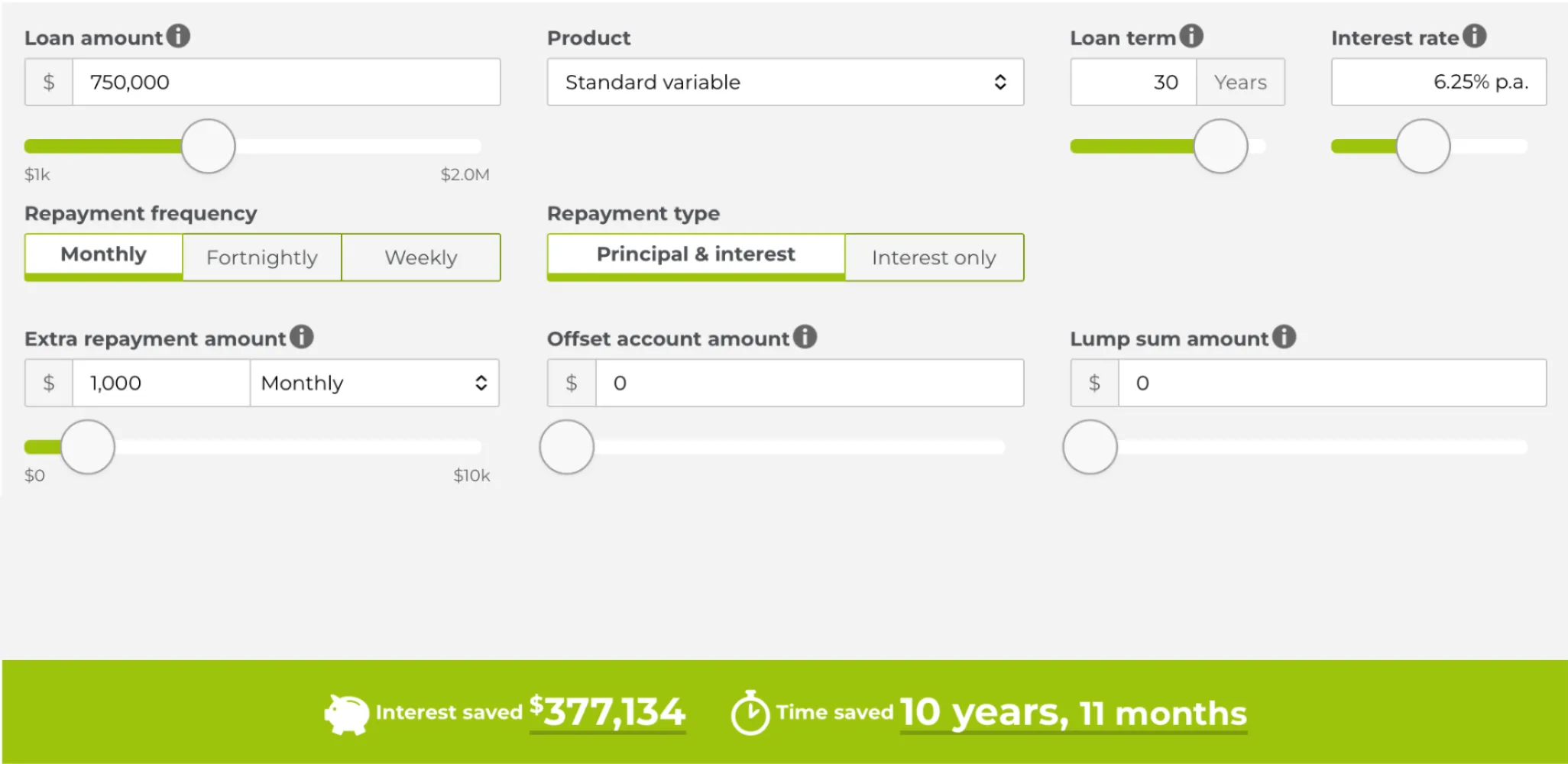
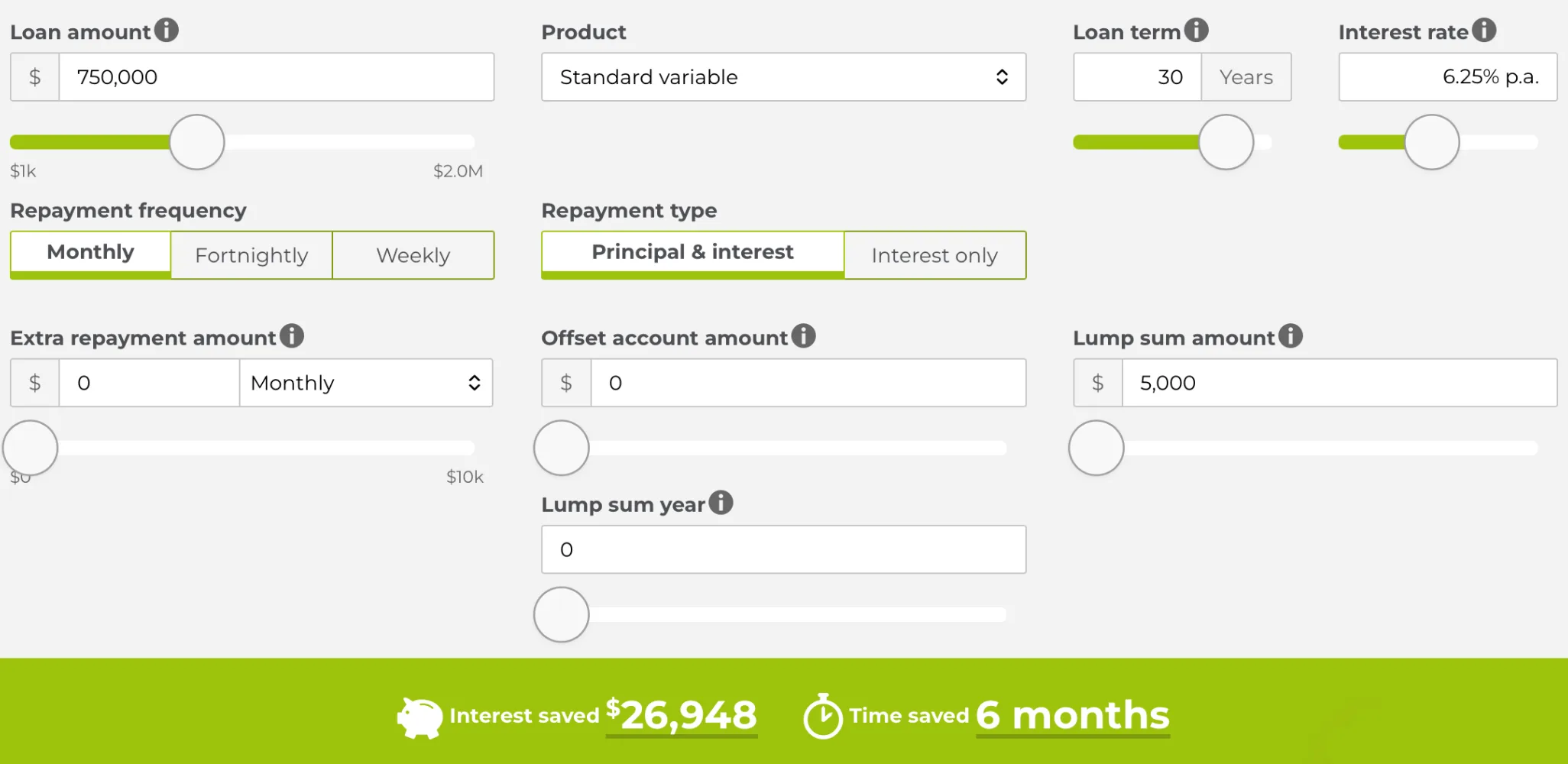
I ran it while writing this, on our own calculator, using a $750,000 loan over 30 years and an illustrative interest rate of 6.25 per cent, broadly around current owner-occupier lending rates at the time of writing.
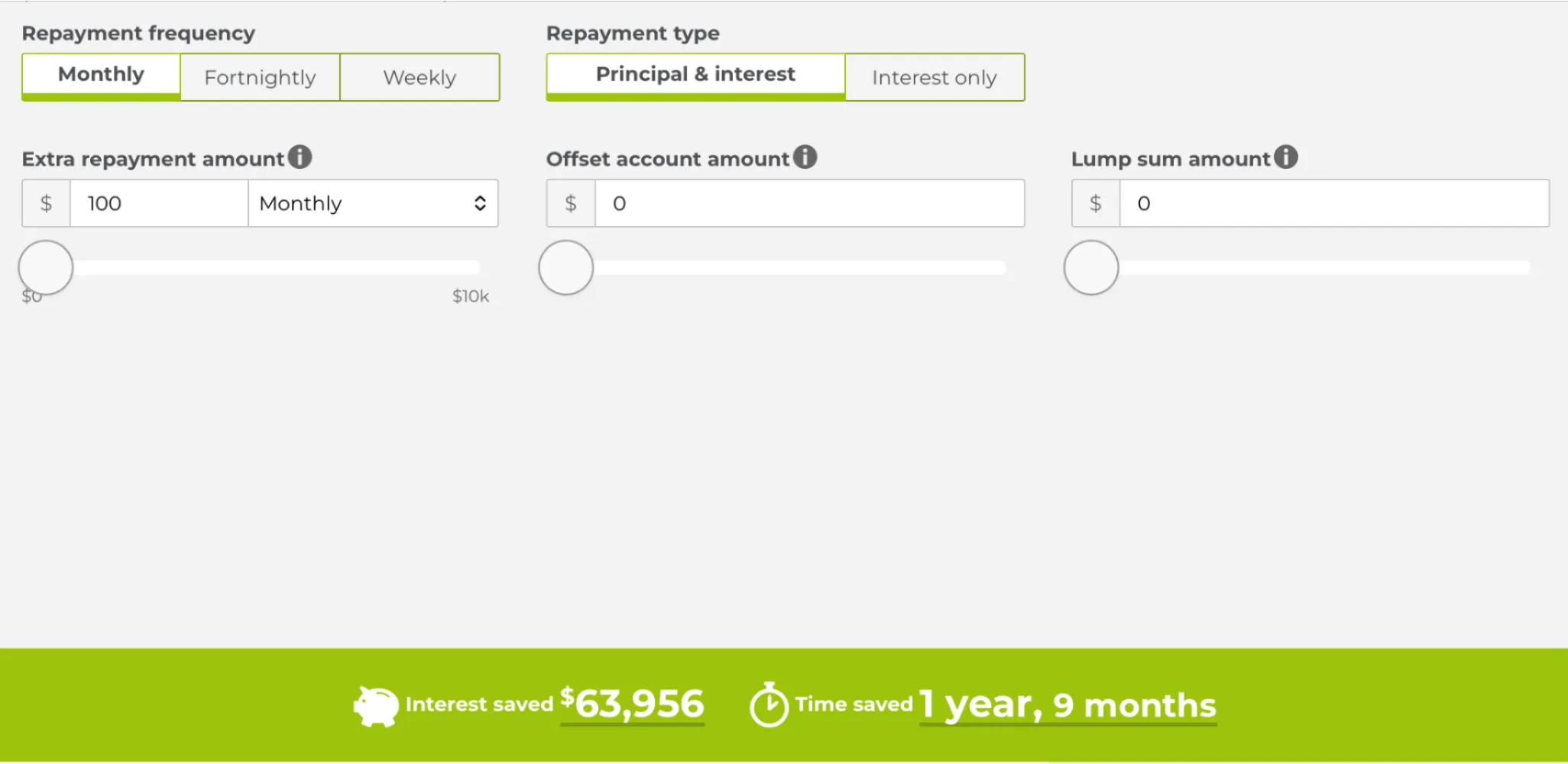
- An extra $100 a month saves $63,956 in interest and takes 1 year and 9 months off the loan.
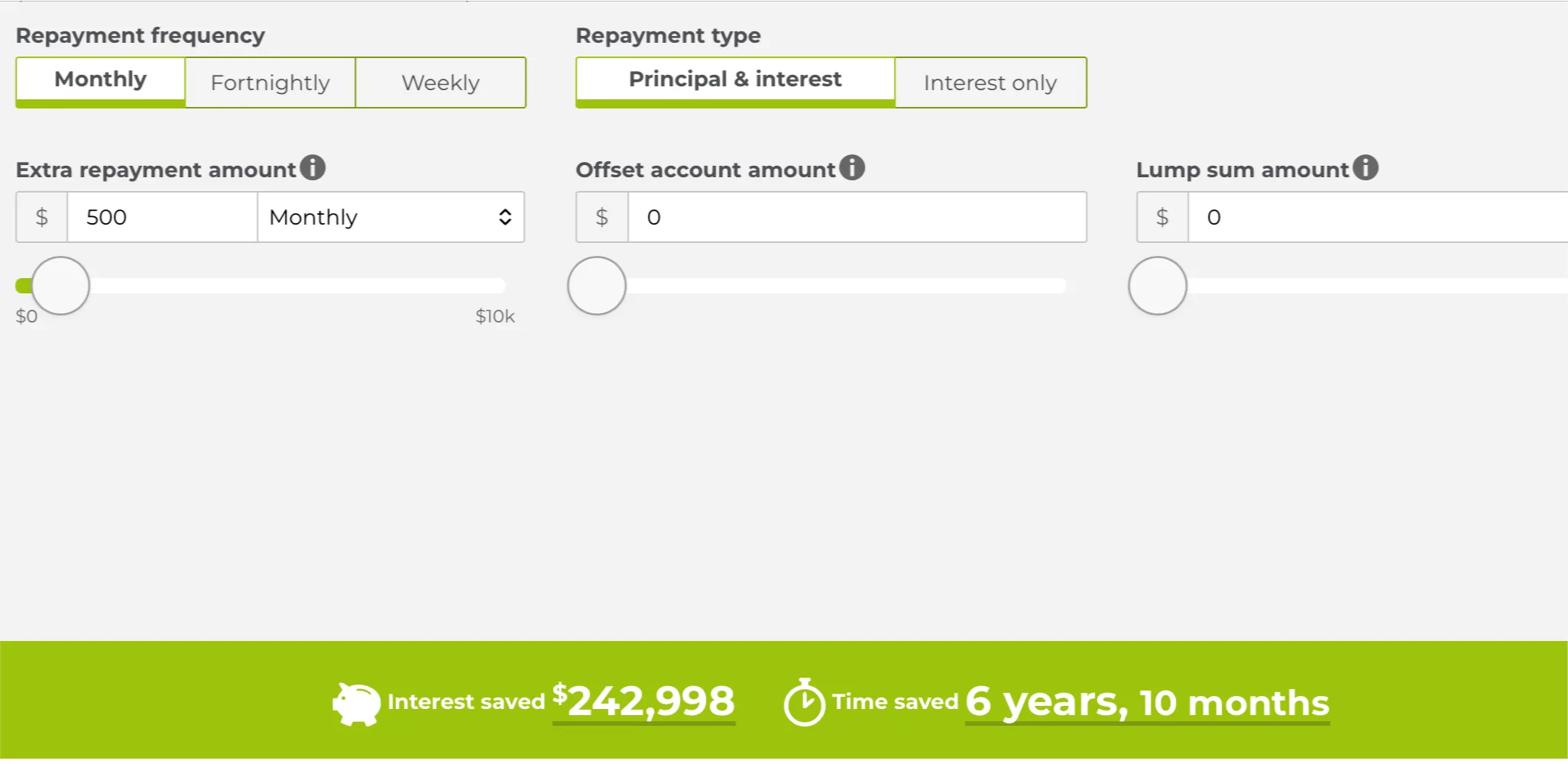
- An extra $500 a month saves $242,998 and takes off 6 years and 10 months.
- An extra $1,000 a month saves $377,134 and takes off 10 years and 11 months.
- And a single $5,000 lump sum, paid at the start, saves $26,948 and takes off 6 months.
No course. No strategy. No fee.
This article is general information only. It is not financial, tax or credit advice. Mortgage products, interest calculations, fees, redraw rules and offset arrangements differ between lenders. Speak with your lender, mortgage broker, accountant or a licensed financial adviser about your own circumstances.
Try our Mortgage Repayment Calculator
The part nobody tells you: timing beats size
Look closely at those four numbers, because the most useful thing in them is not the biggest figure.
Work out what each one costs you, and what it takes off the interest.
The $100 a month adds up to roughly $33,900 of your own money over the life of that loan. It removes $63,956 of interest.
The $500 a month adds up to about $139,000. It removes $242,998.
The $1,000 a month adds up to about $229,000. It removes $377,134. The $5,000 lump sum costs you $5,000. It removes $26,948.
Put those side by side and the pattern is not really about size. The lump sum is a small fraction of what the monthly options cost, and it still takes a meaningful amount of interest off, because every dollar of it is working for the full thirty years. A dollar you pay in year twenty-two only gets to work for eight.
That is the actual principle, and it is worth more than any strategy anyone will sell you. It is not how much you pay. It is how early it lands.
Two things follow from that.
If a lump sum ever comes your way, putting it on early does disproportionate work. And if you can only manage a small amount each month, start now rather than waiting until you can afford a bigger one. Most families cannot magic up $1,000 a month, and the way this
topic usually gets discussed makes them feel there is no point starting at all. There is very much a point.
One caveat on the lump sum figure. That $5,000 is modelled as landing at the start of the loan. The same $5,000 ten years in saves considerably less, for exactly the reason above.
Why it works
A principal and interest home loan has two parts. Some of your repayment reduces what you borrowed. The rest is interest charged on what you still owe.
In the early years of a long loan, a large share of each repayment goes to interest. Reduce the principal sooner and there is simply less balance left for future interest to be calculated on.
ASIC’s Moneysmart makes the same point: extra repayments can help pay a mortgage off sooner and reduce total interest, particularly when made earlier in the life of the loan.
I describe it in plain English as compounding in reverse. That is not the technical term, but it is the right idea. Compounding is what makes banks money. Extra repayments turn a little of it back the other way.
What we did when we bought our first home
When I bought my first home, we had no strategy at all. We were just determined to get ahead where we could.
We would do the weekly shopping, and on the way out we would pass the bank. If there was $5 or $10 or $50 left in the wallet, we would walk in and put it on the loan.
It did not feel like much. Some weeks it was a few dollars.
But the logic was simple. If that money came off the principal today, I was not paying interest on it for the next twenty or thirty years.
One small payment changes nothing. A lot of small payments, made consistently over many years, change quite a lot.
You do not have to stop living
This is where mortgage advice gets ridiculous. Someone tells a family to cancel everything they enjoy and live on baked beans until the loan is gone.
That is not what I am suggesting. Life still has to be lived.
But it is worth sitting down once or twice a year and looking honestly at where the money goes. Streaming services. App subscriptions. A gym membership nobody uses. Delivery fees. A storage plan signed up for years ago and forgotten.
Individually none of it looks dramatic. Together it sometimes adds up.
Maybe you find $50. Maybe $150. Maybe there is genuinely nothing spare, and that is a perfectly fine answer.
The point is to make the choice consciously. If an extra $100 this month gives your family more value than putting it on the mortgage, spend it and enjoy it. Just put the $100 into the calculator once so you know what you are choosing between.
Lump sums count too
Extra repayments do not have to be monthly. A tax refund, a bonus, a commission payment or money from selling something can go straight onto the principal and reduce the balance immediately.
Moneysmart specifically identifies bonuses and tax refunds as lump sums that can help reduce a loan faster.
This is where the timing point really earns its keep. On the example loan, a single $5,000 tax refund put straight onto the principal early saves $26,948 in interest and six months off the term. That is one refund, put on once, taking nearly $27,000 of future interest off the loan.
Our calculator has a lump sum field and a lump sum year field, so you can see what the same amount does at different points in the loan. The difference is worth looking at.
Offset, redraw and extra repayments are three different things
These get used interchangeably and they are not the same.
An offset account is a transaction account linked to your loan. If you owe $500,000 and have $20,000 in a 100 per cent offset, interest is generally calculated as though you owed $480,000. The money stays accessible.
That flexibility is genuinely useful, but offsets are not automatically better. Some loans with offset facilities carry higher rates, package fees or account fees, and some offer only a partial offset rather than 100 per cent. The benefit has to be weighed against the cost of the product.
A redraw facility generally lets you take back extra repayments you have already made. The rules vary widely between lenders, and there can be limits, minimums, fees or delays. Moneysmart recommends checking your lender’s actual terms before relying on redraw for access to cash.
That distinction matters if your household also needs an emergency buffer. Paying every spare dollar into the loan is not always the right call if getting it back out is difficult.
Extra repayments simply reduce the principal.
The calculator lets you model an offset balance as well, so you can compare the two before you talk to a broker about which structure suits you.
Fortnightly repayments
One common approach is paying half the monthly amount every two weeks. Because there are 26 fortnights in a year, that can work out as the equivalent of 13 monthly repayments instead of 12, depending on how your lender structures it.
Moneysmart lists this as one way to get ahead, but how your particular lender calculates and applies repayments matters. Check before assuming.
Our calculator lets you switch between monthly, fortnightly and weekly.
Before you buy an investment property because someone told you it is a tax strategy
This is where I get most cautious about courses marketed online.
There is nothing wrong with owning an investment property. A well chosen one can be part of a sensible long term plan.
But buying a property mainly because of tax benefits is a different thing, and the rules have just changed significantly.
The reforms announced in the 12 May 2026 Federal Budget are now law, and the detail below reflects the position as at August 2026. From 1 July 2027, negative gearing on residential property is generally limited to new builds. Properties held at 7:30pm AEST on 12 May 2026 are exempt from the changes. For established residential property acquired after that time, losses will generally no longer be deductible against unrelated income such as wages, though they can be applied against residential property income and carried forward.
From 1 July 2027, the existing 50 per cent CGT discount is being replaced for many future gains with inflation-based cost base indexation, together with a minimum 30 per cent tax rate on relevant real capital gains. There are exceptions and transitional rules, including special treatment for new residential builds and the existing main residence exemption. The changes apply broadly across CGT assets, not only property.
Two things worth being very clear about.
Your own home is not affected by the CGT change. The main residence exemption is unchanged. If you are reading this as a homeowner rather than an investor, none of the above applies to the house you live in.
Capital growth and tax treatment are different things. Property values will do whatever the market does. What has changed is how gains and losses are taxed, not whether property can grow in value. Anyone telling you either that property is now worthless or that it is still a guaranteed tax play is overselling.
If somebody is recommending you take on hundreds of thousands of dollars of debt because of tax benefits, talk to a qualified accountant or financial adviser who knows your actual circumstances. Not someone selling a weekend course.
The boring version usually wins
There is something appealing about a clever strategy. It feels like a shortcut everyone else missed.
But on a home loan, the boring approach is genuinely powerful. Spend less than you earn where you reasonably can. Keep an emergency buffer. Pay on time. Put extra against the loan when it suits. Review your rate regularly, because Moneysmart notes that even a slightly lower rate can save substantial money over a long term. Repeat.
Nobody could sell a seminar on that. It still works.
You cannot control the Reserve Bank, or your lender’s variable rate, or what property prices do next year. You can have some influence over how much you borrow, how much you repay, how often, how much sits in an offset, and whether you review your loan. Those decisions compound in your favour over a long period.
Have a play with your own numbers
The figures above are for one example loan. Yours will be different.
Put in your real balance, your rate and your remaining term. Then try $50, $100, $500. Try a lump sum. Try an offset balance. Switch to fortnightly.
Then look at the only two numbers that matter: interest saved, and time saved.
You might decide extra repayments are not realistic right now. That is a completely legitimate answer, and it is a better answer for having seen the numbers.
Try our Mortgage Repayment Calculator
Frequently asked questions
Do extra repayments really reduce the interest on a mortgage?
Yes. On a principal and interest loan, interest is charged on what you still owe, so reducing the principal sooner leaves less balance for future interest to be calculated on. The effect is larger the earlier in the loan the repayment is made. On the example loan, an extra $100 a month removes nearly $64,000 of interest.
Is it better to make a lump sum early or spread extra repayments out?
Timing matters more than size. A dollar paid early works for the whole remaining term, while a dollar paid near the end works only briefly. That is why a single lump sum paid early can take off a surprising amount, and why starting small now beats waiting until you can afford more.
Is an offset account better than making extra repayments?
It depends on the product. An offset reduces the interest calculated on your loan while keeping the money accessible, which is useful if you also need an emergency buffer. But some offset loans carry higher rates or fees, and some are only partial offsets, so the benefit has to be weighed against the cost. Get advice on your own situation.
Do fortnightly repayments help pay off a home loan faster?
They can. Paying half the monthly amount every fortnight can work out as 13 monthly repayments a year instead of 12, depending on how your lender applies it. Check how your particular lender calculates repayments before assuming.
Does the change to capital gains tax affect my own home?
No. The main residence exemption is not affected by the changes. The reforms are aimed at investment assets. If you are reading this as a homeowner rather than an investor, they do not apply to the house you live in.
The bottom line
You do not need a course to understand one of the simplest ways to reduce the cost of a mortgage. Reduce the principal sooner and there is less balance for interest to be charged on.
For some households that might be an extra $1,000 a month. For most it is closer to $100. Some months it will be nothing at all, and that is life.
But an extra $100 a month on that example loan is $63,956 that stays in your pocket instead of going to your lender, and nearly two years of your life back. One $5,000 refund put on early is nearly $27,000.
When we bought our first home, sometimes all we had left after the shopping was a few dollars. We put it on the loan anyway. It was not glamorous and nobody could sell a course around it.
Every dollar we paid off belonged to us instead of the bank. I would much rather see that money in your pocket.
Truth. Strategy. Sold.
About the author: Brendan Leahy has been selling homes throughout the Perth Hills and Foothills since 2002, with more than 1,500 personal sales.
This article provides general information only and does not constitute financial, tax, credit or investment advice. Calculator results are estimates based on the information entered and the assumptions used. Interest rates, fees, loan features and repayment calculations vary between lenders and change over time. Before changing your loan, making an investment decision or relying on any tax treatment, speak with an appropriately qualified professional.